Alexander Calder
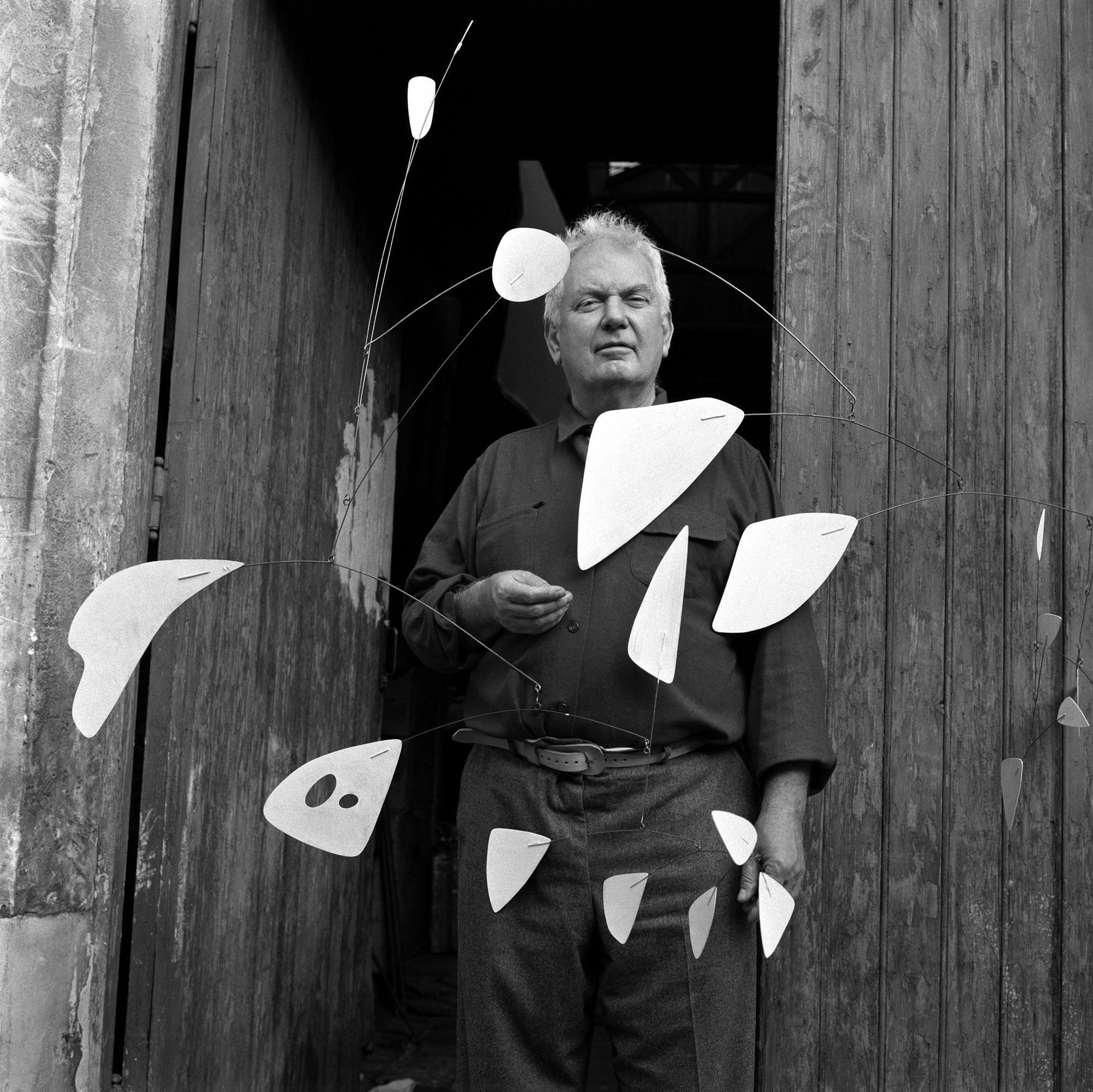
Calder with 21 feuilles blanches (1953), Paris, 1954
Photograph by Agnès Varda © Agnès Varda
Alexander Calder (1898–1976)
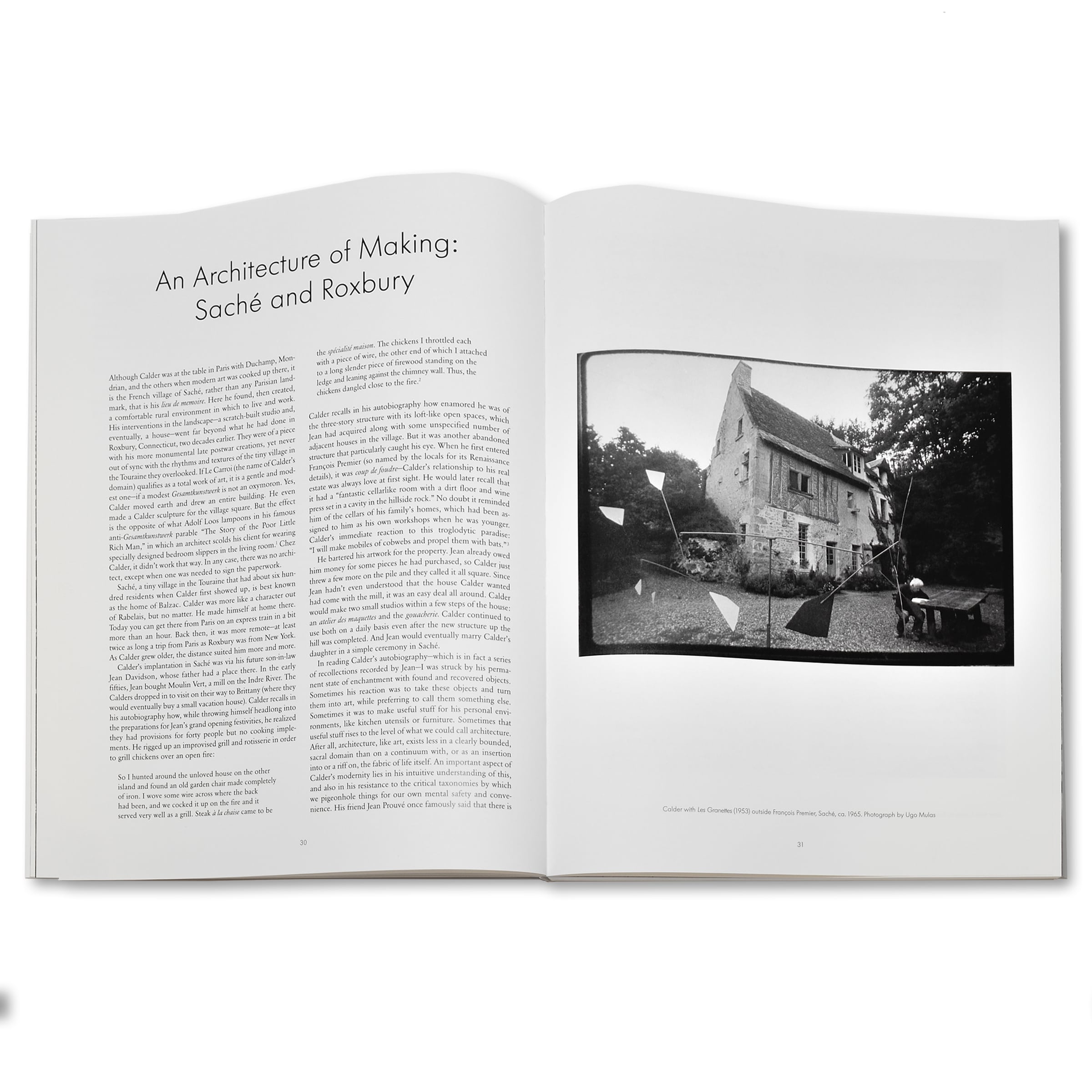
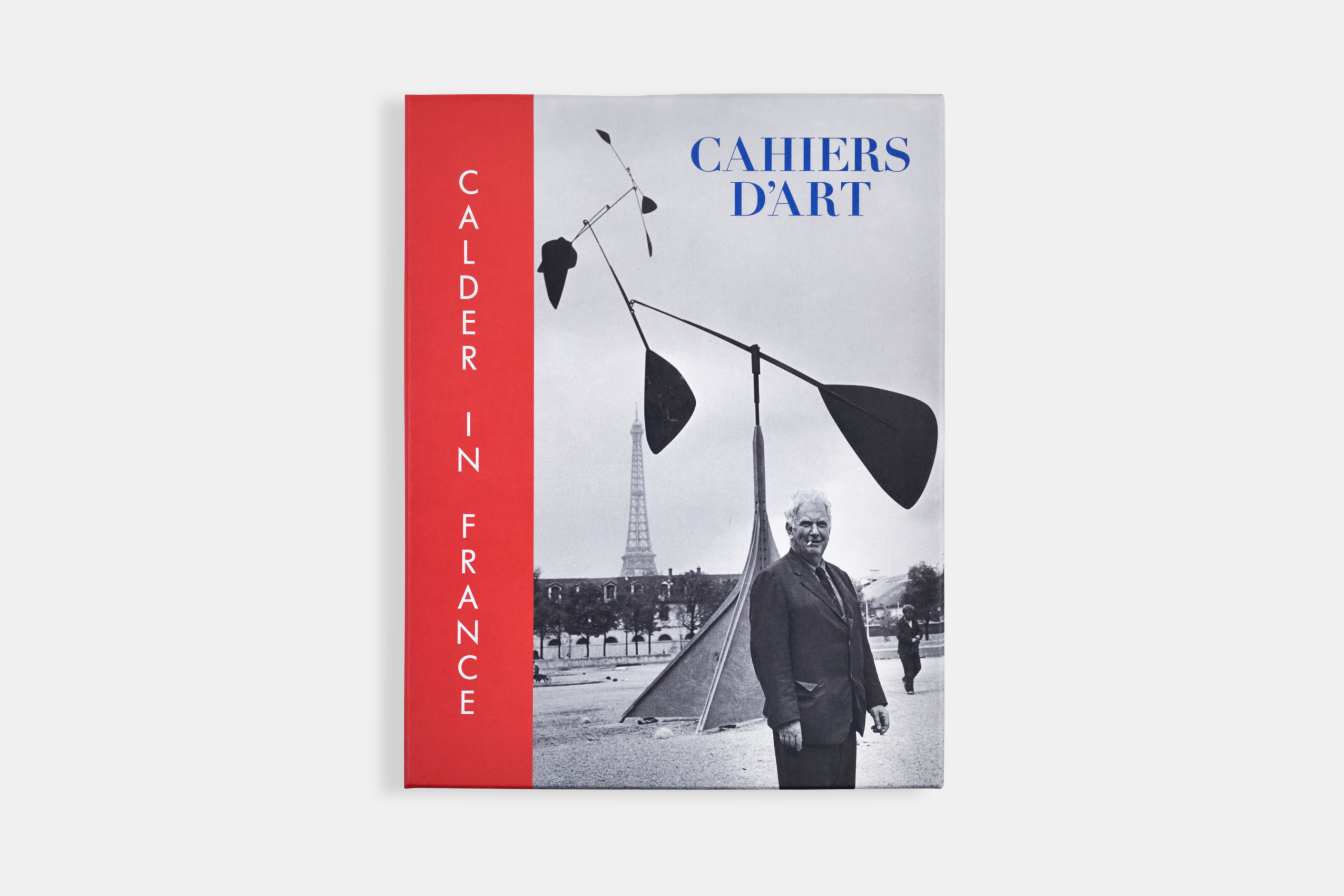
Alexander Calder is among the most inventive and influential artists of the twentieth century, and one whose relationship with Cahiers d'Art spans decades of shared history. Born in Lawnton, Pennsylvania, Calder trained as a mechanical engineer before turning to art, studying at the Art Students League of New York. He settled in Paris in 1926, quickly immersing himself in the city's avant-garde circles and forging friendships with Joan Miró, Fernand Léger, and Marcel Duchamp, among others.
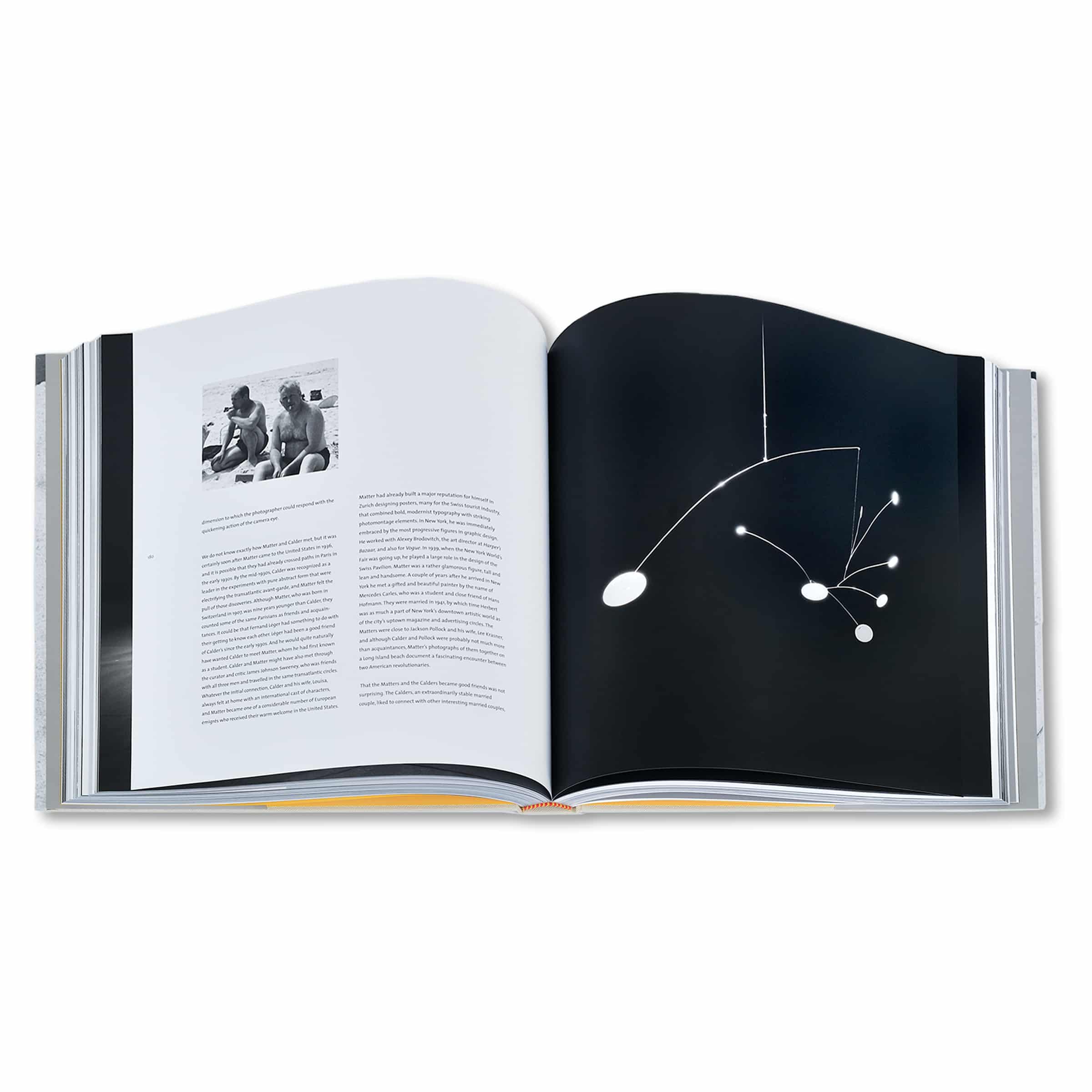
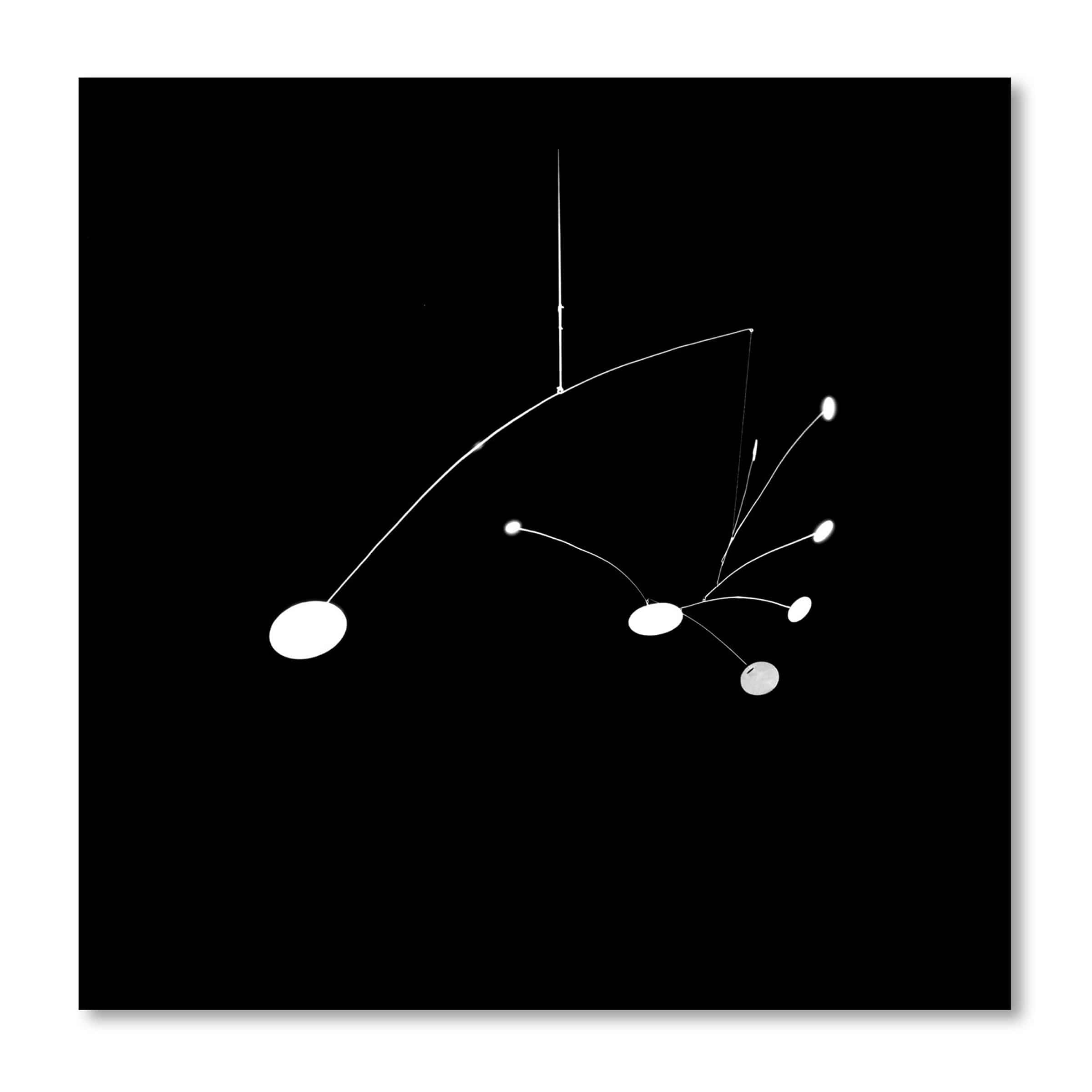
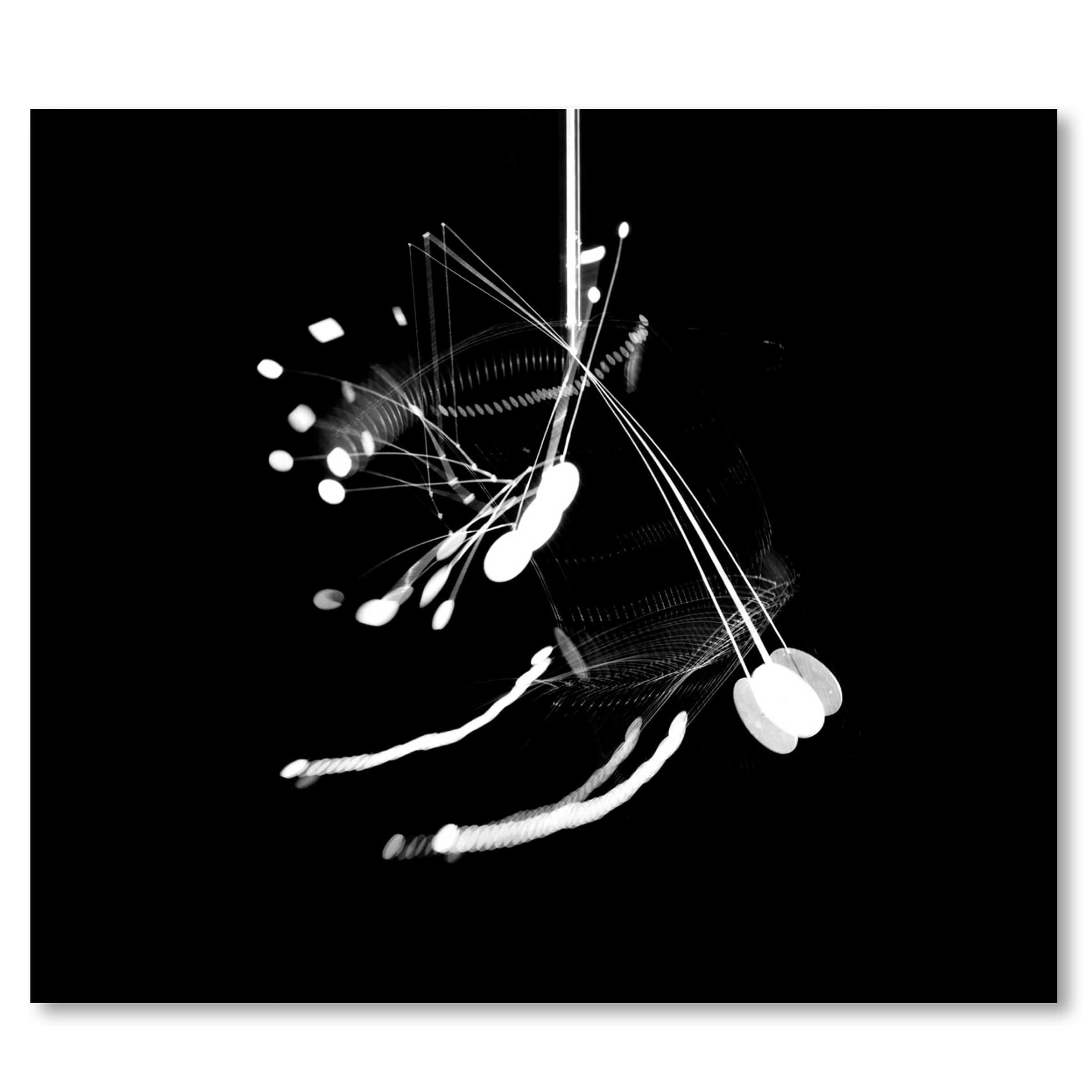
Calder's singular contribution to modern art was the invention of the mobile, a form of kinetic sculpture that introduced real movement, chance, and time into three-dimensional work. Alongside his mobiles, Calder created stabiles (large-scale static sculptures), wire constructions, gouaches, jewelry, and theatrical sets, all marked by the same spirit of play, structural ingenuity, and irreverent humor. His monumental stabiles can be found in public spaces across the world, including Le Spiral (1958), permanently installed at UNESCO Headquarters in Paris, one of the most iconic examples of his large-scale work in dialogue with architecture and public life.
His work fundamentally expanded what sculpture could be: not a fixed object, but a living system in perpetual transformation.
Calder and Cahiers d'Art
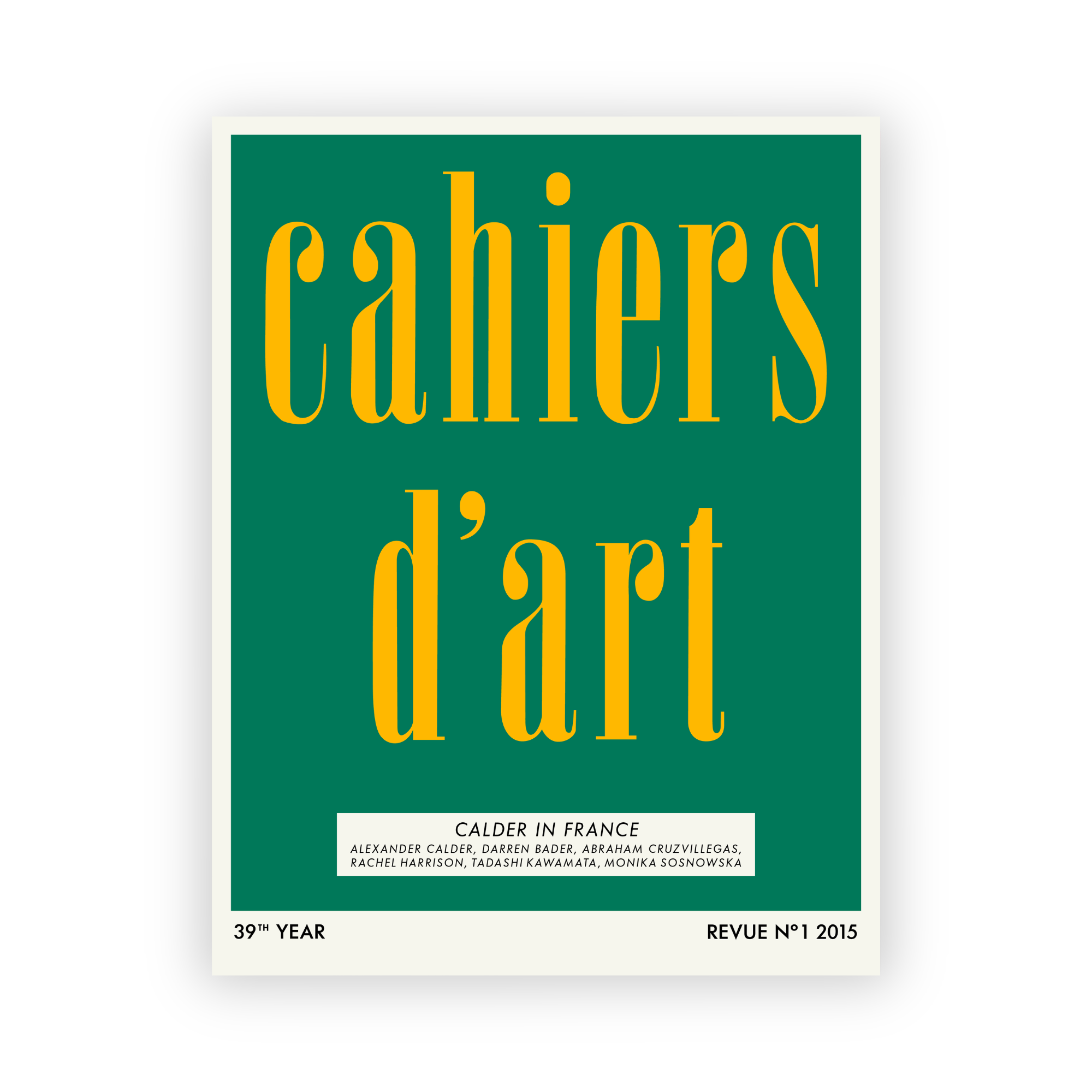
Christian Zervos met Alexander Calder during a stay in Paris in the early 1930s, and the two became friends, with Zervos emerging as an early and consistent supporter of the artist's work. The first publication dedicated to Calder in Cahiers d'Art was Anatole Jakovski's insightful text on his mobiles, published in Cahiers d'Art 1933, nos. 5–6 — a volume that also included some of the earliest photographic depictions of Calder's objects in motion, captured by photographer Marc Vaux.
Following Zervos's coverage of the Spanish Republican Pavilion at the 1937 Paris World's Fair, where Calder exhibited his Mercury Fountain in front of Picasso's Guernica, his recognition of the artist's enduring importance only deepened. In 1939, he published an eloquent article on Calder's mobiles, "Mobiles en mouvement" (Cahiers d'Art 1939, nos. 1–4). This was followed by Gabrielle Buffet's richly illustrated "Sandy Calder, forgeron lunaire" and Georges Mounin's "L'objet de Calder" (Cahiers d'Art 1945–1946), which together situated Calder as a wholly singular figure: one who had made instability, humor, and physical motion into the very substance of modern sculpture. A later issue featured André Masson's 1942 poem, "L'Atelier d'Alexander Calder" (Cahiers d'Art 1949, no. 2). These were not incidental notices but considered acts of critical and literary engagement, placing Calder at the heart of the evolving conversation that Cahiers d'Art sustained across the twentieth century.
This relationship extended beyond the printed page. In 1954, an exhibition at the Cahiers d'Art gallery was devoted to Calder, and a mobile was suspended from the ceiling of the space. It would remain there until Christian Zervos's death, becoming quietly woven into the gallery's own identity. Throughout their lives, the artist and the publisher maintained a warm personal correspondence, with Calder addressing Zervos by the affectionate nickname "Taki."